Author: Advatech
-
Protocols
For Specific protocols please see the practical section/s. Here each movement at each joint has it’s own specific protocols (towards the middle of the page after the set up section). Warm up An initial warm up, including stretching and gentle cardiovascular work, should be performed for 15 minutes prior to the use of the isokinetic…
-
What is Isokinetic?
Isokinetic (n) is a term used to describe a type of movement or exercise. Isokinetic or Isokinetics Definition: The word isokinetic is most commonly used in sports science and medicine. In these settings isokinetic defines a type of exercise or movement. Translated literally isokinetic (i·so·ki·net·ic pronounced ī’sō-kə-nĕt’ĭk) means movement at a constant speed. The key…
-
What is Isometric?
The term isometric (n) comes from the Greek “ios” which means the same, and “metric” which means distance. i·so·met·ric (s-mtrk) Combined together they make a static contraction where there is no perceivable motion. There are two types of isometric resistance:- Isometric is variable effort against an immovable force Note: Resistance band exercises are not Isometric technically they are Isotonic The…
-
What is Isotonic?
Isotonic (n) literally means equal tension. In exercise science an isotonic contraction is a contraction in which the tension remains constant as the muscle shortens or lengthens. i·so·ton·ic (adj.) (s-tnk) Isotonic is fixed resistance variable speed movement. For example weights in a gym. Although ‘isotonic’ is the term used most frequently to describe fixed resistance variable speed exercise, ‘isoinertial’…
-
Concentric
Concnetric (n) con·cen·tric is a term used to describe a type of movement or exercise. Concentric Definition: The word concentric is most commonly used in sports science and medicine. In these settings concentric defines a type of exercise or movement. Translated literally concentric means towards the centre. This type of contraction occurs when the tension generated within amuscle is sufficient to overcome…
-
Eccentric
Eccentric (n) ec·cen·tric is a term used to describe a type of movement or exercise. Eccentric Definition: The word concentric is most commonly used in sports science and medicine. In these settings eccentric defines a type of exercise or movement. Translated literally eccentric means away from the centre. Whenever a muscle lengthens it generates a contractile force meaning all movements in the body occur…
-

History of Isokinetic (s)
Isokinetic movement has been available since the late 1950’s. First introduced by Hettinger isokinetic movement was is in contrast to the other forms of motion in that it permitted maximum muscle contraction throughout the full range of joint motion. Origionally referred to as ‘accommodating resistance exercise’. This new resistance was variable in proportion to the change in muscular…
-

Why Use Isokinetic (s)?
Isokinetic motion is unique in that the force developed by the subject is equally matched by the machine. Isokinetics has been shown to effective in many situations. Below are specific examples for selected joints: Knee: All the below authors used isokinetic strength as the gold standard measure following arthroscopy. In fact in ACL rehab: Amongst…
-
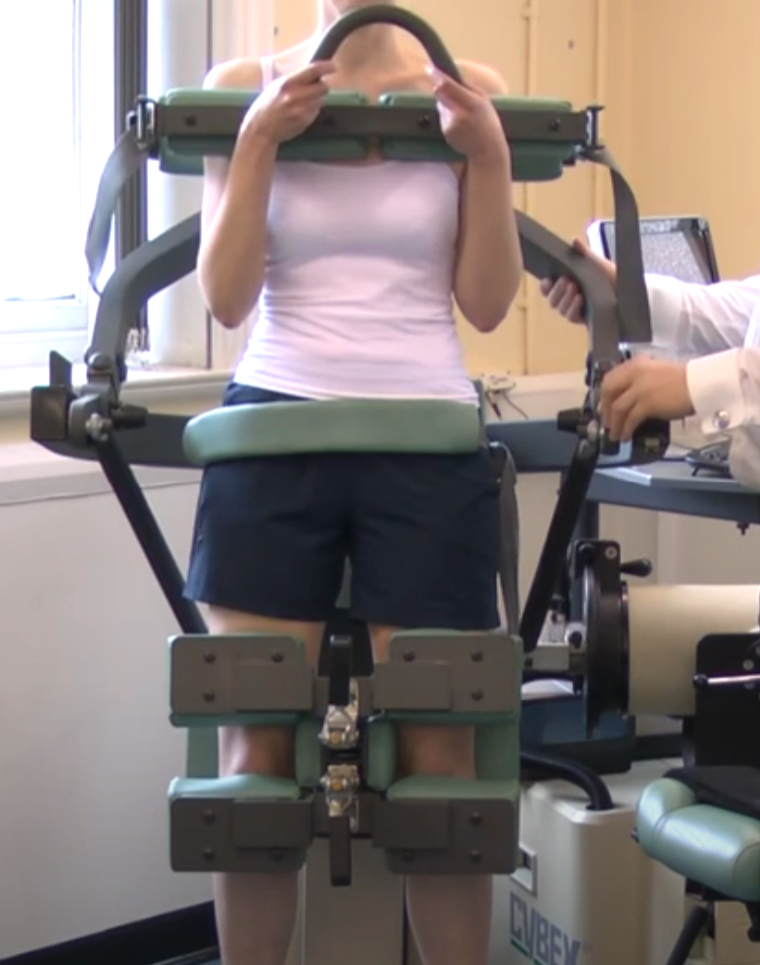
Lumbar Spine Flexion and Extension
Testing of the trunk is limited on the 3 largest dynamometers on the market at the moment to flexion and extension of the lumbar spine. There have been trunk machines in the past which offered rotation and side flexion but they appear to have been phased out. CSMI/Cybex offer a standing unit which attaches onto…
-
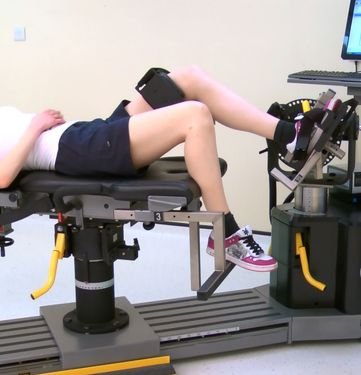
Ankle Plantar / Dorsi Flexion
Plantar and dorsi flexion are normally performed in either the supine (or modified supine / seated), prone or standing positions. The ankle poses problems not shared by the knee joint. As it is such a polyarticulating area with a wide variety of movements and allot of muscles spanning it, the ankle throws up many procedural issues,…